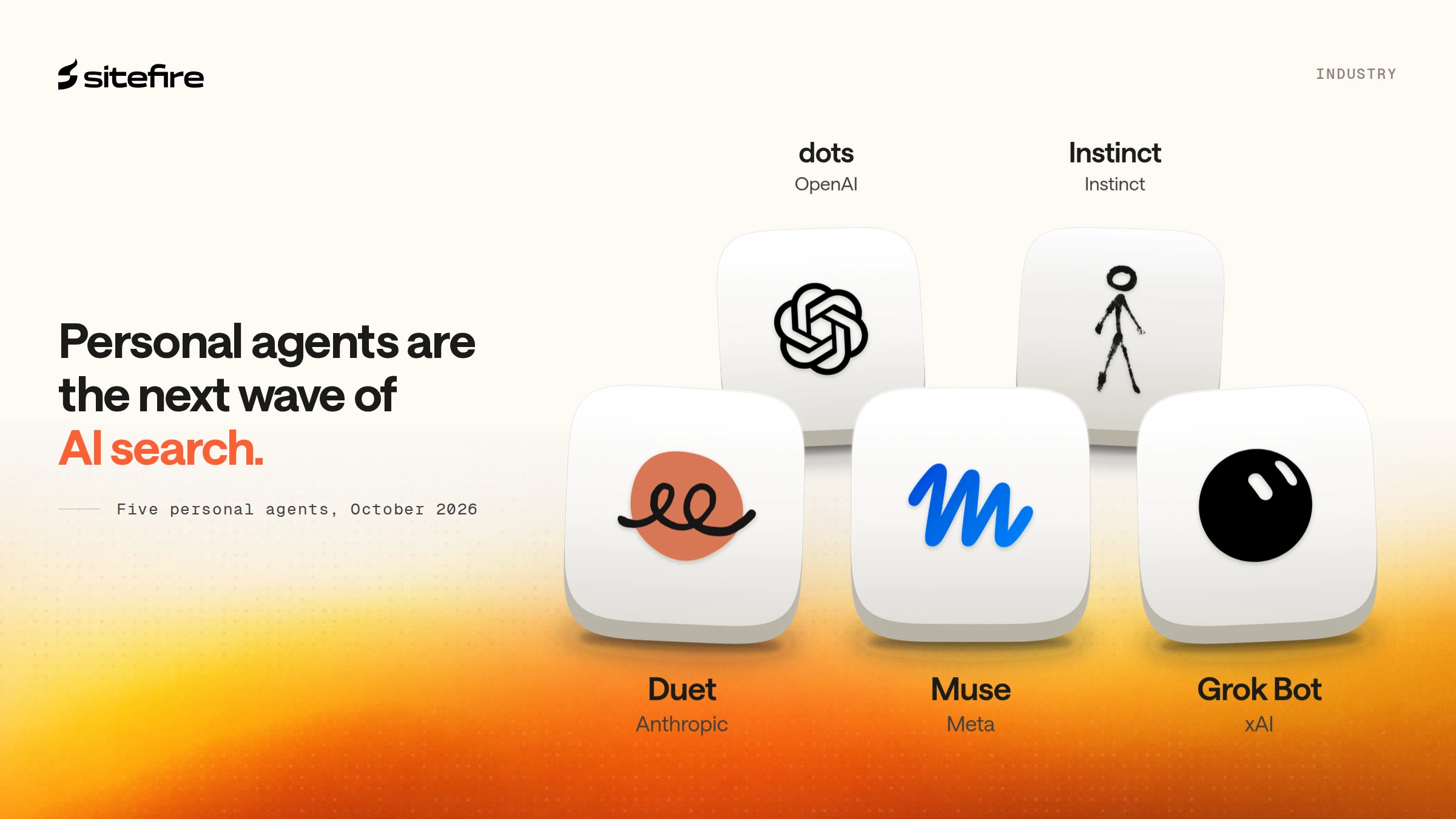
Personal agents are the next wave of AI search
Personal agents like Meta's Muse don't just answer, they get the quote and check out. What that means for conversion, comparison portals and your website.

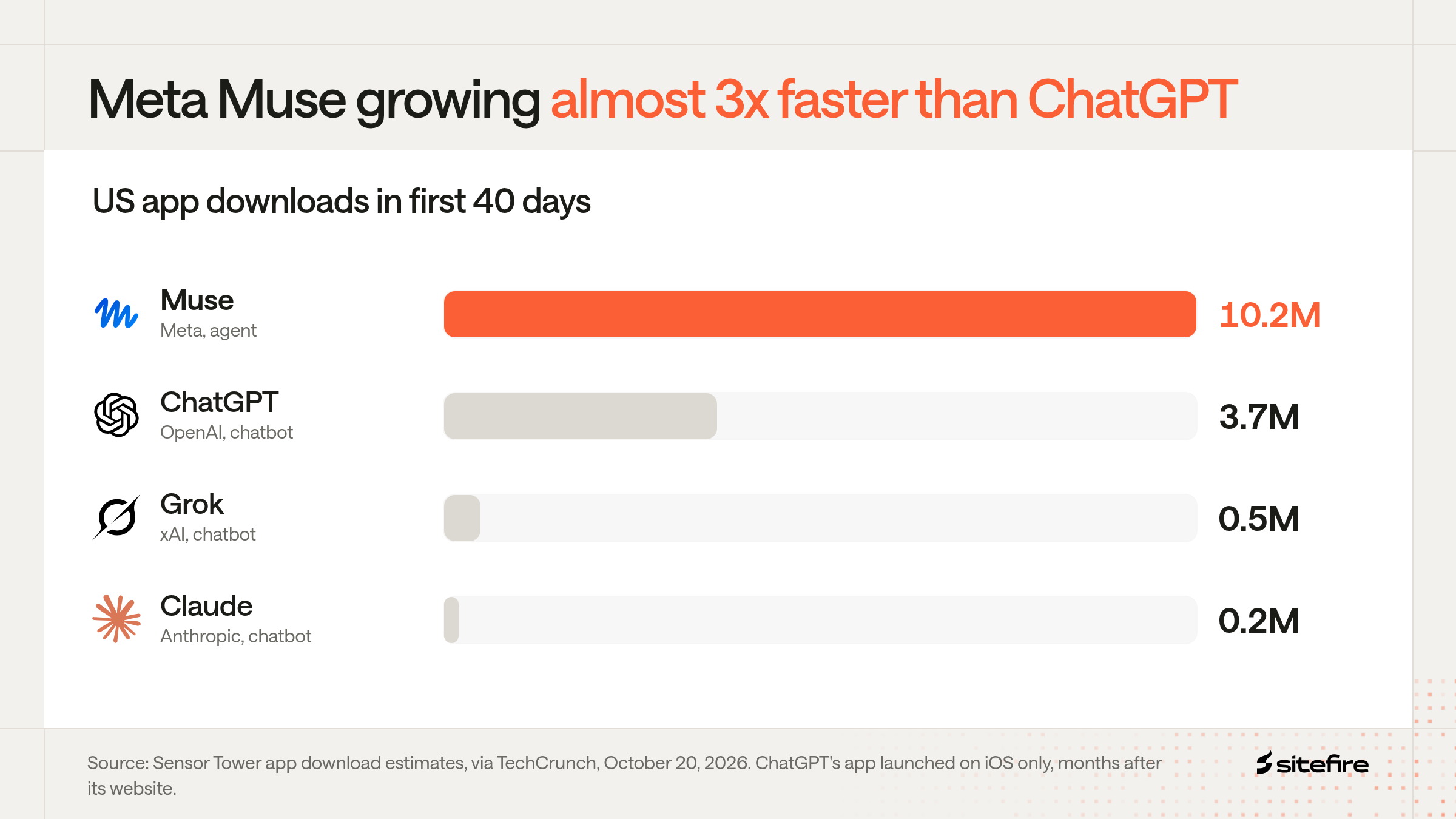
Personal agents are here, and they are already showing up in checkout flows. Meta's Muse got 10.2 million US app downloads in its first 40 days, almost 3 times the 3.7 million ChatGPT's app got in its first 40 (TechCrunch).
On Meta's Q3 earnings call on October 21, Mark Zuckerberg said more than 10 million people in the US and Canada set up Muse, and that shopping is its top use (transcript).
This means personal agents are the next wave of AI search. Chatbots like ChatGPT read and cite your web page and send some of their users to it. But personal agents can go further: they get the quote and go all the way through checkout.
In this article, we'll cover the basics of personal agents and what this means for your business.
Aren't personal agents just chatbots with a new name?
Not quite. The key difference about personal agents is that they have their own computer and browser, so they can keep working while you are away and only come back when they need your permission.
For example, Meta says Muse runs on a dedicated computer with its own browser, and xAI's Grok Bot signs in and can work across websites, including ones with no clean API.
Here is a short comparison:
| AI search (ChatGPT, AI Mode) | Personal agents (Muse, dots, Grok Bot, Duet, Instinct) | |
|---|---|---|
| What you get back | an answer with links | a finished task |
| Where it works | the chat window | its own computer and browser |
| When it works | while you are typing | after you close the app |
Who has launched a personal agent?
Four of the big AI labs just launched their personal agent: Meta's Muse, OpenAI's dots, xAI's Grok Bot and Anthropic's Duet. Grok Bot came first on August 11 (xAI), Muse followed on September 8 (Meta) and dots on September 29 (OpenAI); Duet is in a US research preview (Anthropic). The startup Instinct has been in an invite-only beta since August (Fortune).
Developers were already creating their open-source agents with OpenClaw in March (see our coverage on this in how to spot them in your logs). This technology has now made its way into the big labs, as a product for everyone.
Who is already using personal agents?
By our estimate, about 7.5 million people use personal agents each month, with 8 in 10 using Meta's Muse - because it's the only one that is free.
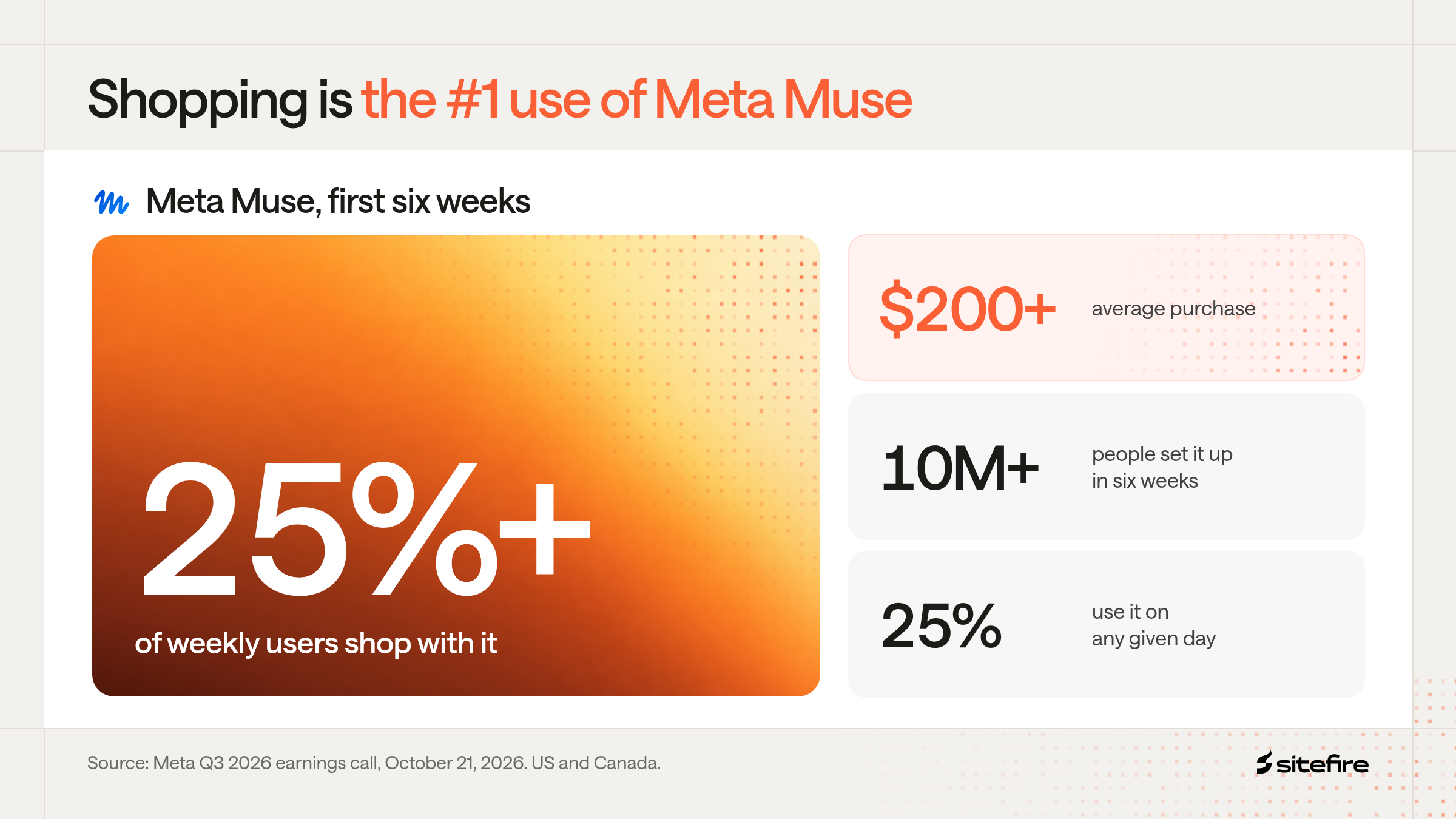
Right now, only Meta and xAI report user numbers. Meta says more than 10 million people set up Muse in six weeks and about a quarter of them use it on any given day, about 2.5 million people (transcript). Grok Bot had more than 800,000 paying weekly users in October, double the month before (The Next Web).
Overall, that is still small next to ChatGPT's 1.2 billion weekly users (OpenAI). But these personal agents are growing fast - even faster than the chatbots. Here is the adoption of Meta's Muse compared to ChatGPT & co. when they launched:
Right now, OpenAI dots is available in ChatGPT's Pro and Business Premium plans. Instinct is invite-only, with 5 invites per user, and its founder says it is approaching $1 billion in annual transaction volume (Fortune). And Anthropic's Duet is still waitlist only. My guess is that they will be rolled out to the paying customer base very soon.
What do people use personal agents for?
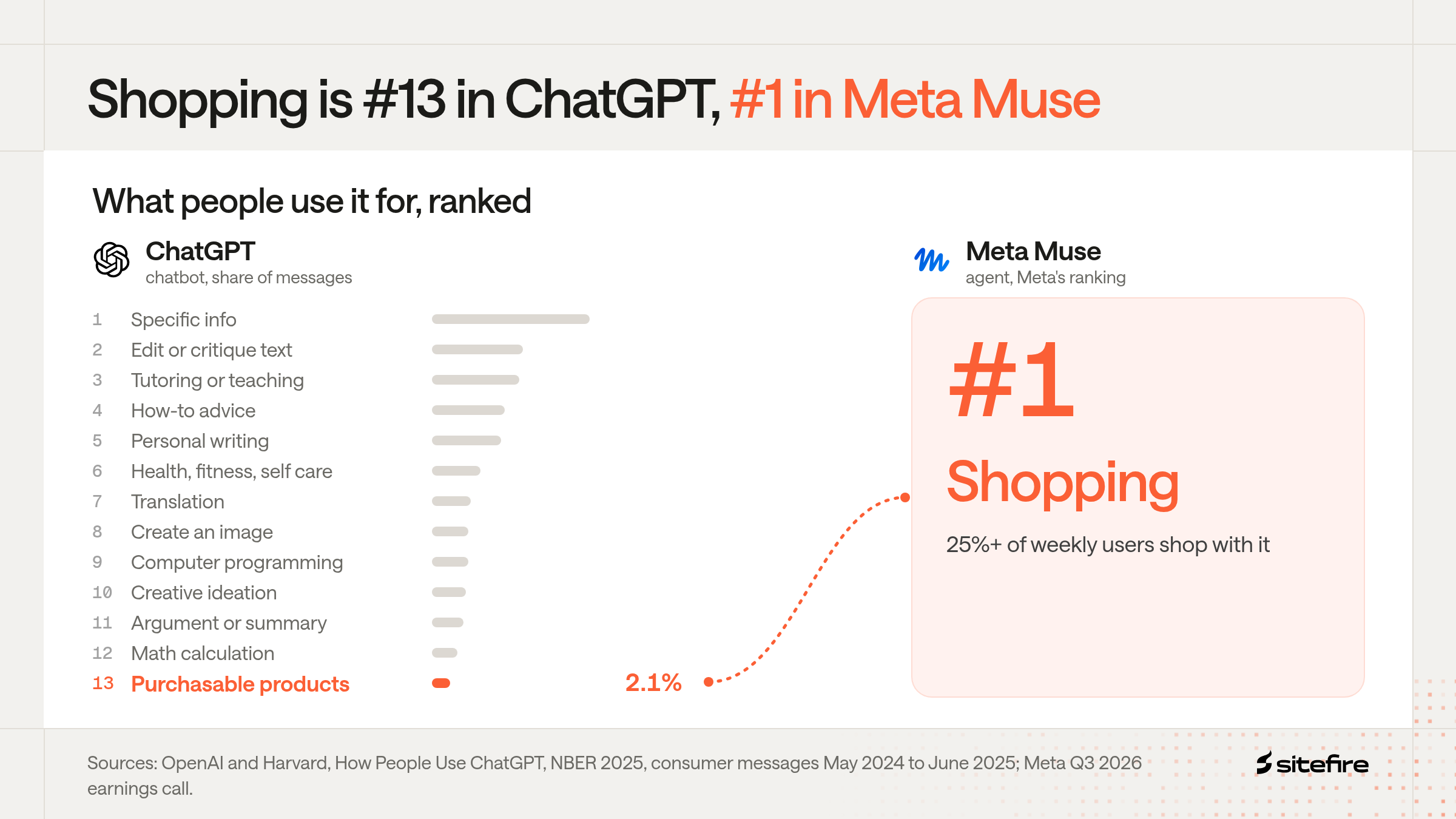
Right now, we only know it for Muse: Meta says shopping is its most common use, with more than a quarter of its weekly users shopping with it.
Of course, people already used chatbots for commercial purposes: OpenAI's head of global ads solutions said roughly 20% of ChatGPT queries have direct commercial intent (Marketing Dive). Prompts about a product to buy, however, are only 2.1% of messages, the 13th largest of 22 topics in OpenAI's study of 1.1 million conversations from May 2024 to June 2025 (OpenAI and Harvard, NBER).
Because personal agents have their own computer and browser, they are better at navigating the web. For chatbots such as ChatGPT, a survey of 1,493 US shoppers in August 2026 revealed that while 18% reached the checkout, only 8% let the chatbot actually complete the purchase (Product.ai).
With Meta Muse, things are different. The average Muse purchase is over $200, and in its first week, Meta had to work with Stripe to raise users' credit limits (transcript).
Do the buyers that come from AI convert better?
This depends on the product or service. For complex purchases, visitors sent by AI convert better. Across all products, the results are mixed.
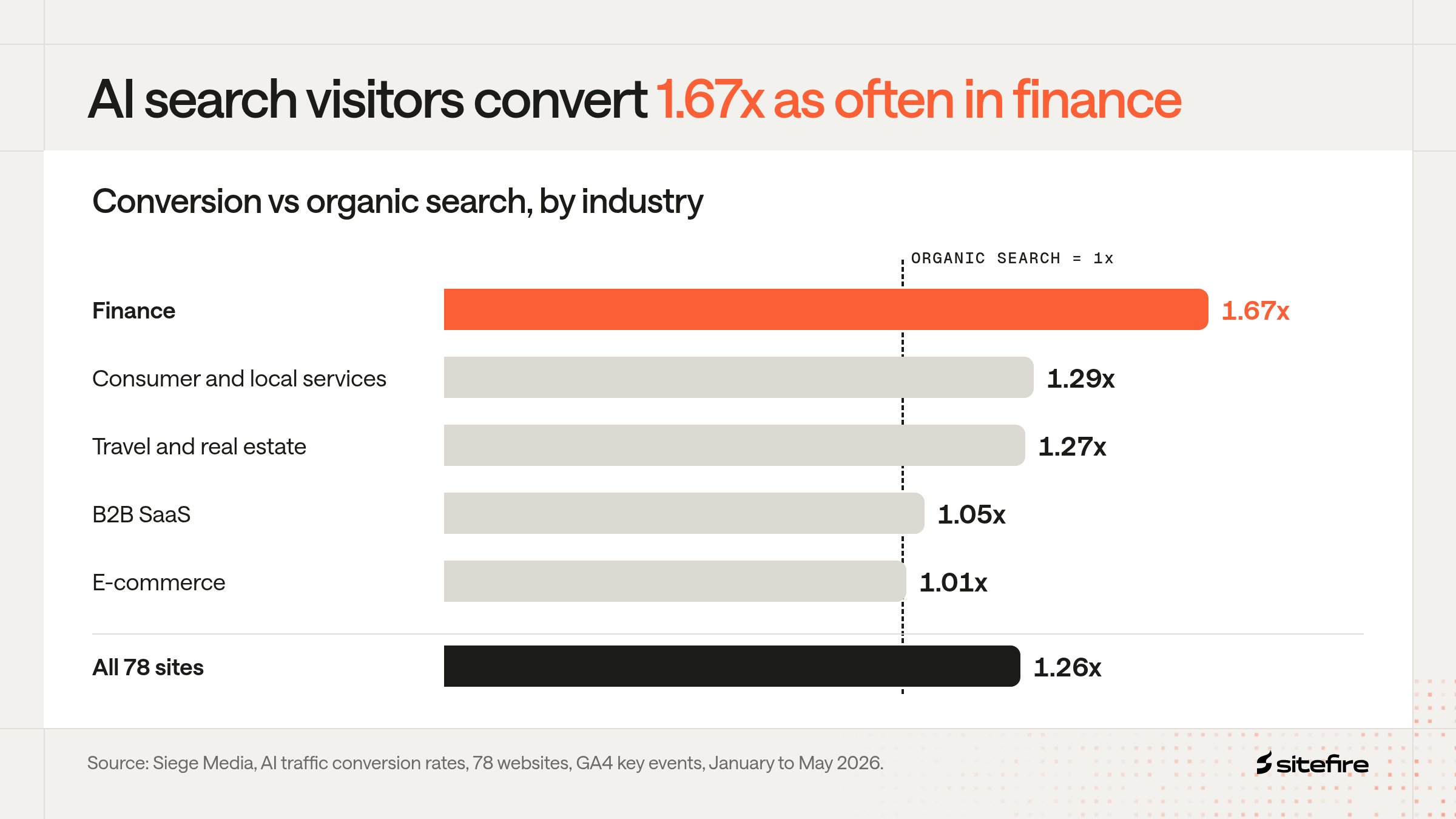
In a study across 78 websites from January to May 2026, visitors from AI chatbots converted roughly 1.26 times better than visitors from traditional search. For finance, they converted 1.67 times better (Siege Media). For B2B SaaS and e-commerce, however, they converted roughly at the same rate (SaaS 1.05x and e-commerce 1.01x).
Another study from 2025 found no significant difference across 54 sites: AI referral traffic converted at 4.87% vs 4.60% for organic search (Amsive).
But the trend is interesting. In US retail, visitors from AI converted 49% worse than all other traffic in January 2025 (Adobe), but 60% better in July 2026 (Digital Commerce 360). Shoppers also arrive more decided: 31% of AI shoppers say they had mostly made up their mind before they reached the brand's site, up from 26% two years earlier (L.E.K.). And finally, 83% say they are more likely to use AI for bigger or more complex purchases (Adobe).
With personal agents, shoppers can go one step further: they completely skip the website visit, and land on the website only to pay - or not at all. In our own Sitefire tests, a ChatGPT plugin went from quote to checkout link in 24 seconds without opening a single page.
Who wins and who loses when agents can buy?
Amazon, Meta and Airbnb might be able to keep their platform business, because they own supply and demand.
Comparison portals might win in the short run, because agents use their curated information. Once agents can get an ad-hoc quote from providers themselves, there is little value in comparison portals apart from independent reviews.
What's more interesting: agents are biased towards information they can process: Machine-readable feature descriptions or numbers are easy to compare - aesthetics and brand reputation are not.
Personal agents might therefore make shopping more about the product and its specifications, and less about the visuals and the brand.
One thing that will remain important, however, is trust: Agents check what others say about you, such as reviews and community forums like Reddit, and not only your own marketing copy.
What should you do about personal agents?
For brands, the first step still remains visibility: make sure AI recommends your brand, so that you make it into the buyer's shortlist.
As a next step, make your product information machine-readable, and ensure that you have good reviews and community sentiment.
Finally, make your website agent-readable: an agent should be able to get a quote or complete the purchase with you - because they will now do it.
To get started, you can try this yourself with ChatGPT's agent or Meta's Muse. Try to get a quote for your own product, and pay attention to the user experience.
At Sitefire, we can help you to make your brand visible in AI search, and to make your website agent-readable, so that you can start capturing this new, emerging distribution channel.
Frequently asked questions
What are personal agents?
Personal agents are AI agents that run on their own computer and browser, keep working while you are away and come back when they need your permission. Meta's Muse, OpenAI's dots and xAI's Grok Bot launched between August and October 2026. Anthropic's Duet is in a US research preview, and the startup Instinct is invite-only.
How many people use personal agents?
By Sitefire's estimate, about 7.5 million a month in October 2026, in a range of 6 to 10 million. 8 in 10 use Meta's Muse, which more than 10 million people set up in its first six weeks, though not all of them use it every month.
Do AI agents already buy things for people?
Some do. Shopping is the most common use of Meta's Muse, with an average purchase over $200. In a survey of US shoppers, 18 in 100 had reached checkout with an AI assistant such as ChatGPT, and 8 in 100 had let one complete the purchase.
Sources
- Meta. "Q3 2026 Earnings Call Transcript." October 21, 2026. https://s21.q4cdn.com/399680738/files/content_files/META-Q3-2026-Earnings-Call-Transcript.pdf
- Meta. "Introducing Muse." September 8, 2026. https://about.fb.com/news/2026/09/introducing-muse-personal-ai-agent/
- OpenAI. "Introducing dots." September 29, 2026. https://openai.com/index/introducing-dots/
- OpenAI. "GPT-6 and Intelligent UI for everyone." October 7, 2026. https://openai.com/index/gpt-6-for-everyone/
- xAI. "Introducing Grok Bot." August 11, 2026. https://x.ai/news/introducing-grok-bot
- Anthropic. "Claude Duet." Accessed October 29, 2026. https://claude.com/resources/articles/claude-duet
- Fortune. "Meet Noah Shinn: The 23-year-old college dropout whose viral AI assistant is emerging as a new challenger to Mark Zuckerberg's Meta." September 30, 2026. https://fortune.com/2026/09/30/noah-shinn-instinct-ai-assistant-meta-muse-alexandr-wang-tech-series-c-ai-agent-mark-zuckerberg/
- TechCrunch. "Meta's Muse hits 10M US downloads in 40 days, a milestone reached by only 11 other apps" (Sensor Tower data). October 20, 2026. https://techcrunch.com/2026/10/20/metas-muse-hits-10m-u-s-downloads-in-40-days-a-milestone-reached-by-only-11-other-apps/
- The Next Web. "SpaceX signs up Apollo and Nvidia for a new Grok partner network." October 22, 2026. https://thenextweb.com/news/spacex-grok-partner-network-apollo-nvidia
- Marketing Dive. "How OpenAI is positioning ChatGPT ads at its Cannes Lions debut." June 23, 2026. https://www.marketingdive.com/news/how-openai-positioning-chatgpt-ads-cannes-lions-debut/823476/
- OpenAI and Harvard. "How People Use ChatGPT." NBER Working Paper 34255, September 2025. https://www.nber.org/system/files/working_papers/w34255/w34255.pdf
- Product.ai. "Trust in AI Commerce Report, Edition 2." October 14, 2026. https://product.ai/research/trust-in-ai-commerce-report/
- Siege Media. "AI traffic conversion rates." June 2026. https://www.siegemedia.com/research/ai-traffic-conversion-rates
- Amsive. "Does LLM traffic convert better than organic?" September 3, 2025. https://www.amsive.com/insights/seo/llm-traffic-conversion-rate-study/
- Adobe. "Generative AI-powered shopping rises with traffic to U.S. retail sites." August 21, 2025. https://business.adobe.com/blog/generative-ai-powered-shopping-rises-with-traffic-to-retail-sites
- Digital Commerce 360. "Adobe: AI-referral traffic spending, converting more than counterparts." August 19, 2026. https://www.digitalcommerce360.com/2026/08/19/adobe-ai-referral-traffic-data-july-2026/
- L.E.K. Consulting. "Thanks to AI, consumers are arriving at brand and retailer sites ready to buy." July 13, 2026. https://www.lek.com/insights/consumer-products/thanks-ai-consumers-are-arriving-brand-and-retailer-sites-ready-buy
- Sitefire. Agent tests on quote and checkout flows, October 26 and 27, 2026 (to be published November 17).