Insights on AI Search and the agentic web.
Expert research, product updates, and practical guides on helping marketing teams win in the age of AI search.
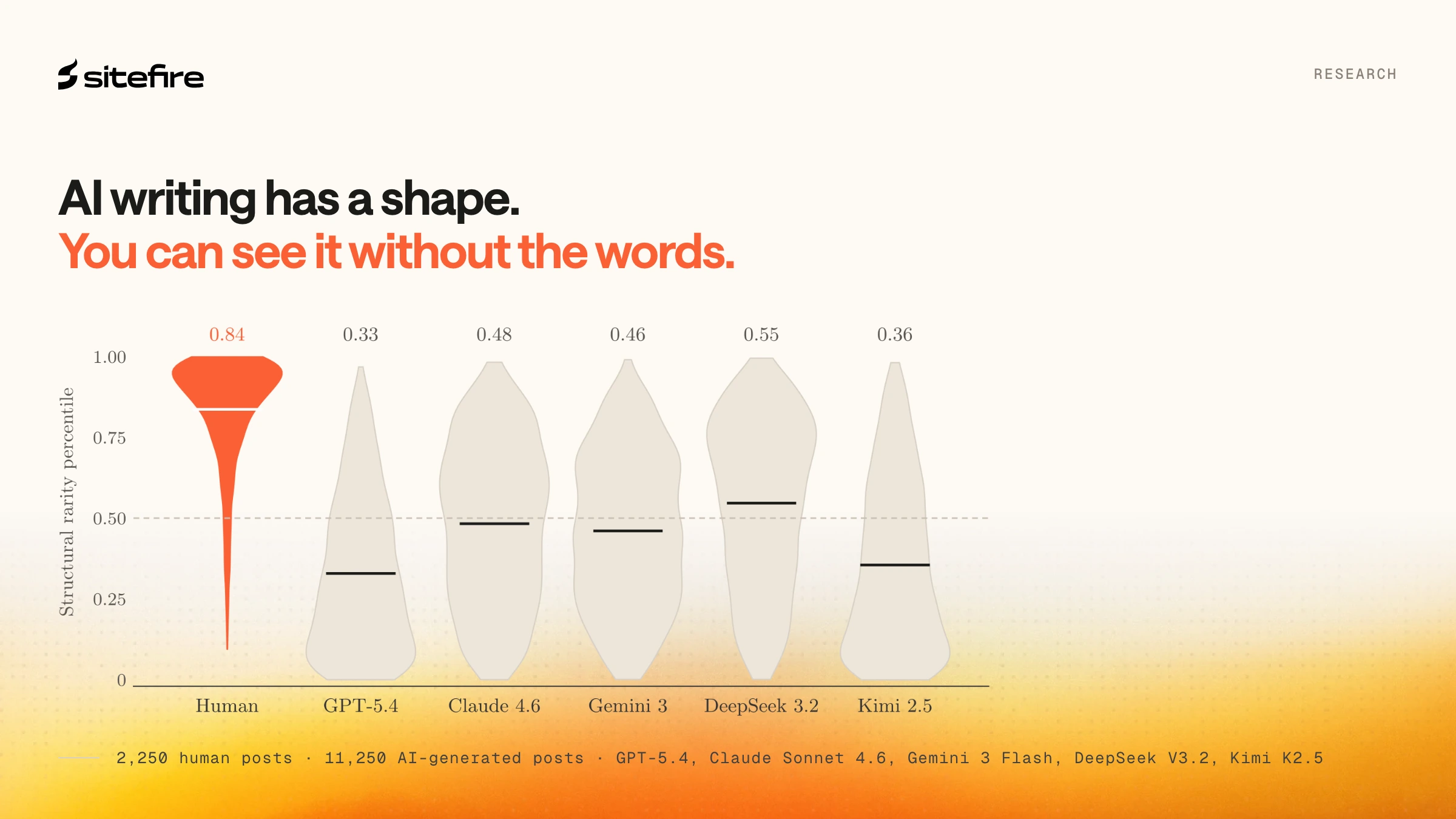
How to Tell AI Slop From Human Writing: Ten Structural Features From 13,500 Blog Posts
AI-generated blog posts read familiar for a reason: they share a shape. A 13,500-post study separates the two by structure alone with a detection score of 98.0 out of 100, and rewording does not move it. The ten features behind it, and what human writing does differently.
 Jochen MadlerSep 4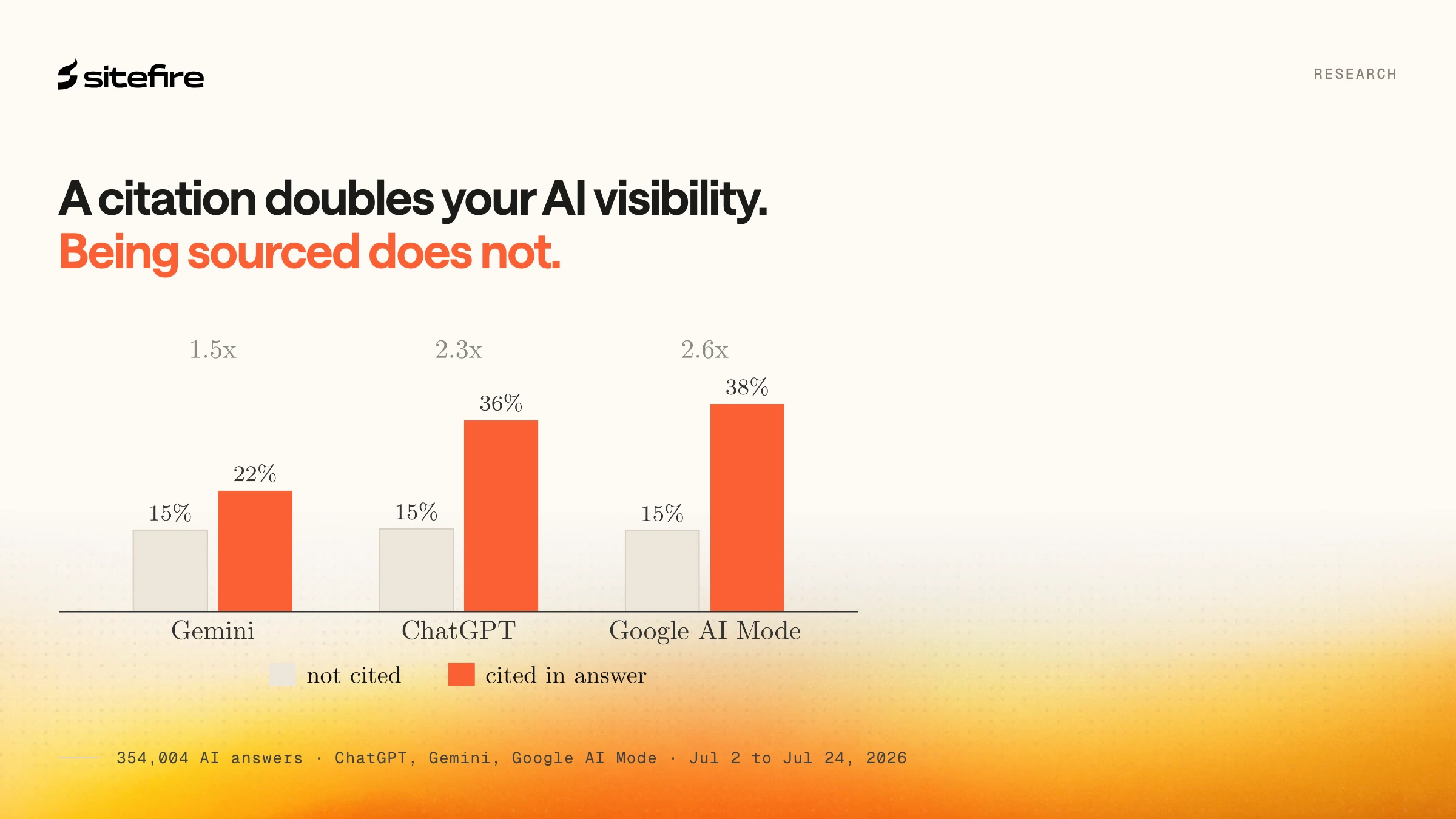
Do AI Citations Actually Matter? What 354,004 AI Answers Show
Sitefire research across 354,004 AI answers on what an AI citation is worth, and why being sourced without being cited pays almost nothing.
Jochen MadlerJul 31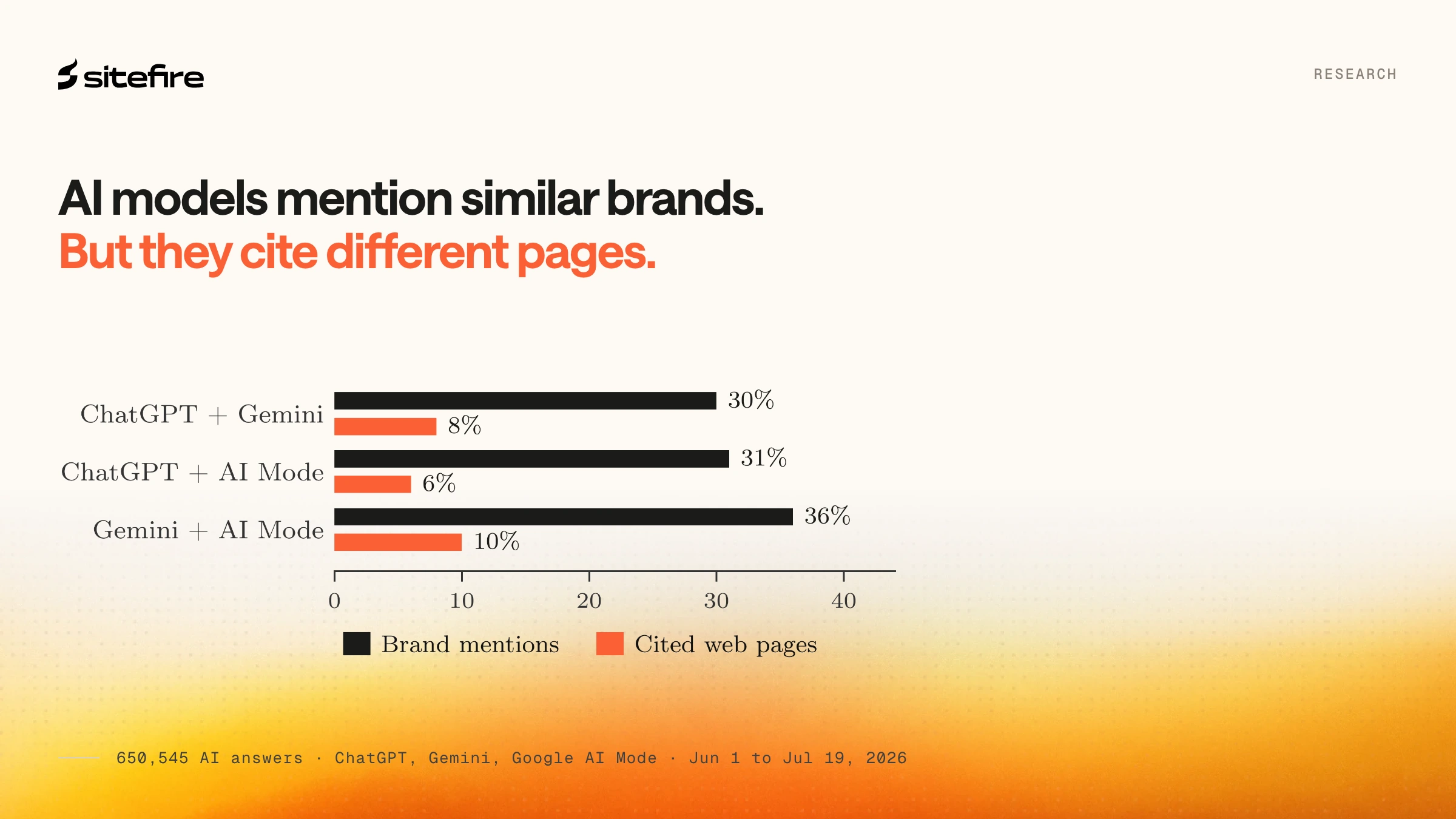
Why AI Models Recommend the Same Brands but Cite Different Sources
Sitefire research on why ChatGPT, Gemini and Google AI Mode cite different sources for the same prompt, and what it means for your AI visibility.
Jochen MadlerJul 21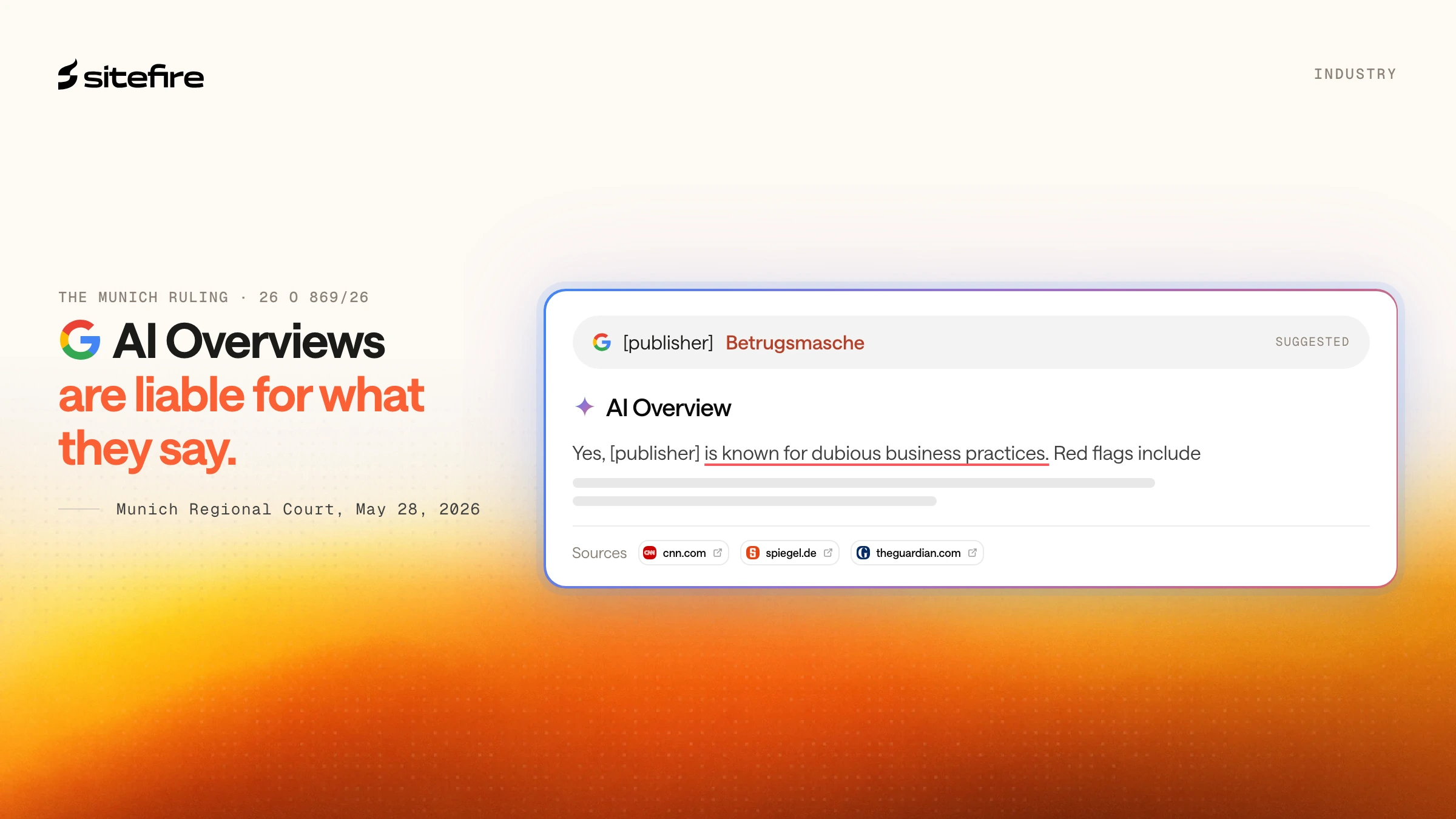
Google Is Liable for What Its AI Overviews Say: Inside the Munich Ruling
A Munich court held Google liable for false AI Overviews. The legal reasoning, the precedents, and what AI Overviews liability means for brands.
Jochen MadlerJun 10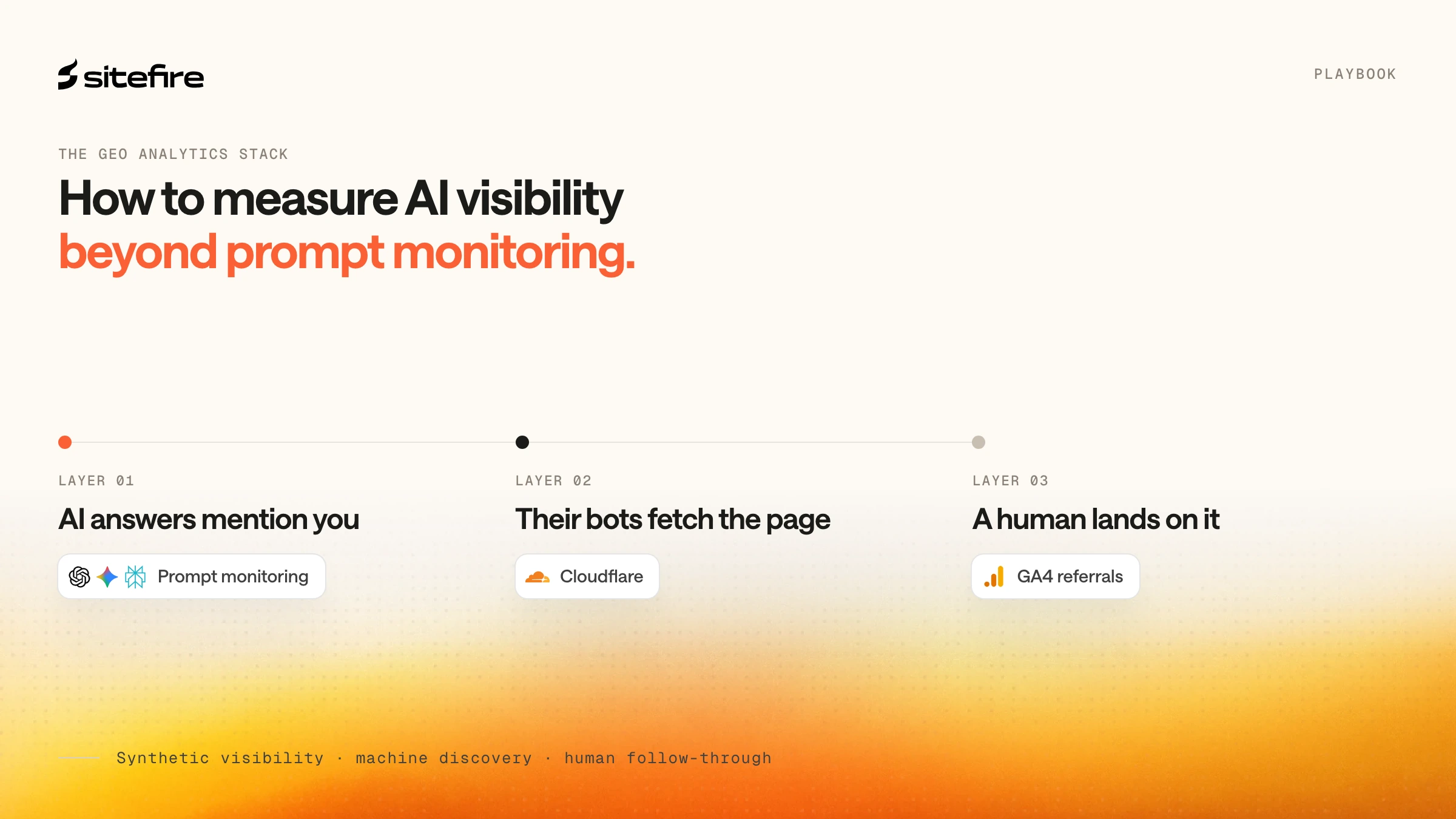
How to Measure GEO Beyond Prompt Monitoring
Prompt monitoring is a useful start, but it only measures synthetic visibility. The real GEO measurement stack adds Cloudflare bot data and GA4 referrals.
Jochen MadlerApr 18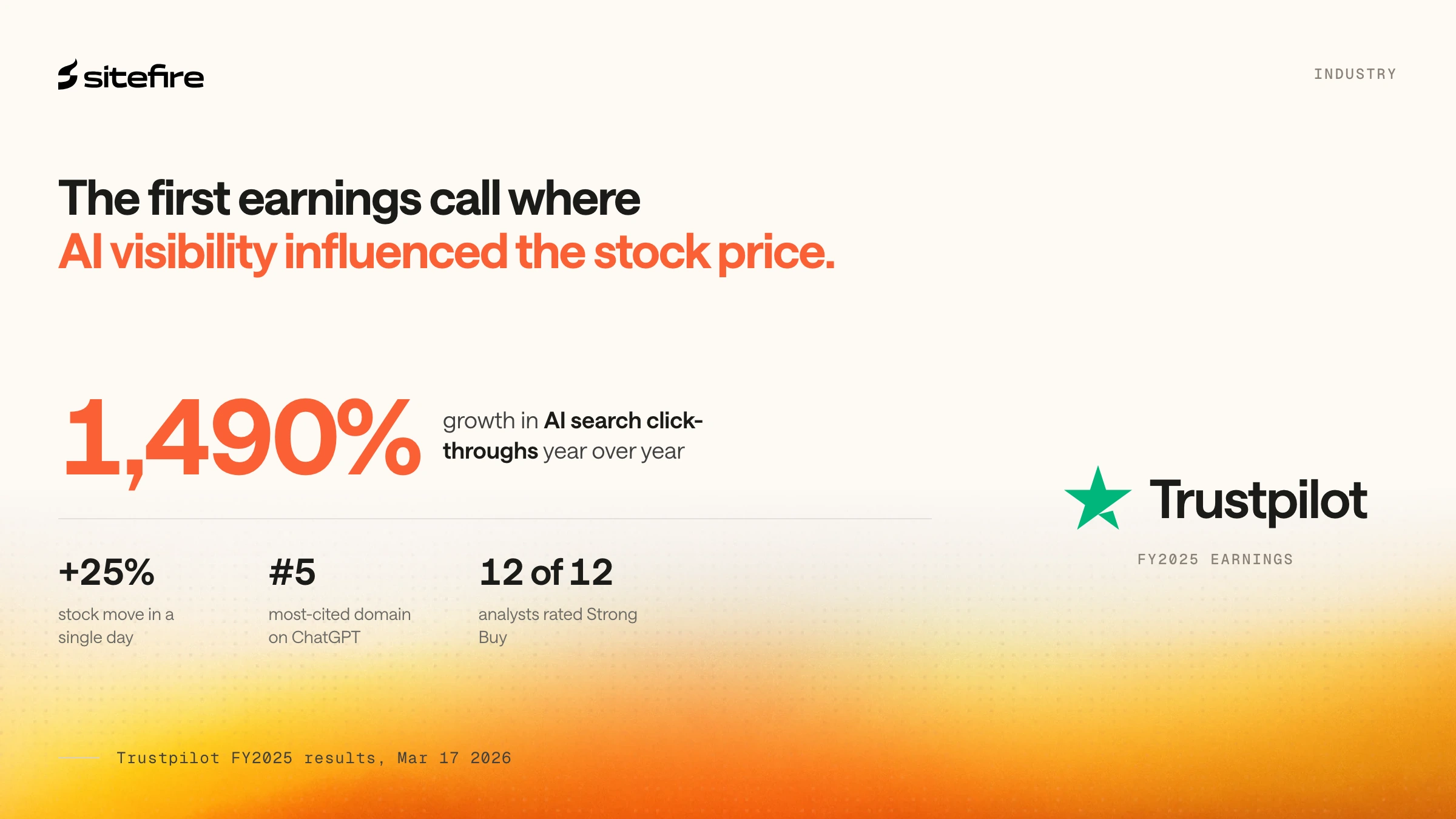
Trustpilot's AI Search Earnings: The First Proof That AI Visibility Drives Revenue
Trustpilot's AI search click-throughs grew 1,490% YoY and the stock surged 25%. What the first AI search earnings report reveals about brand visibility.
Jochen MadlerMar 29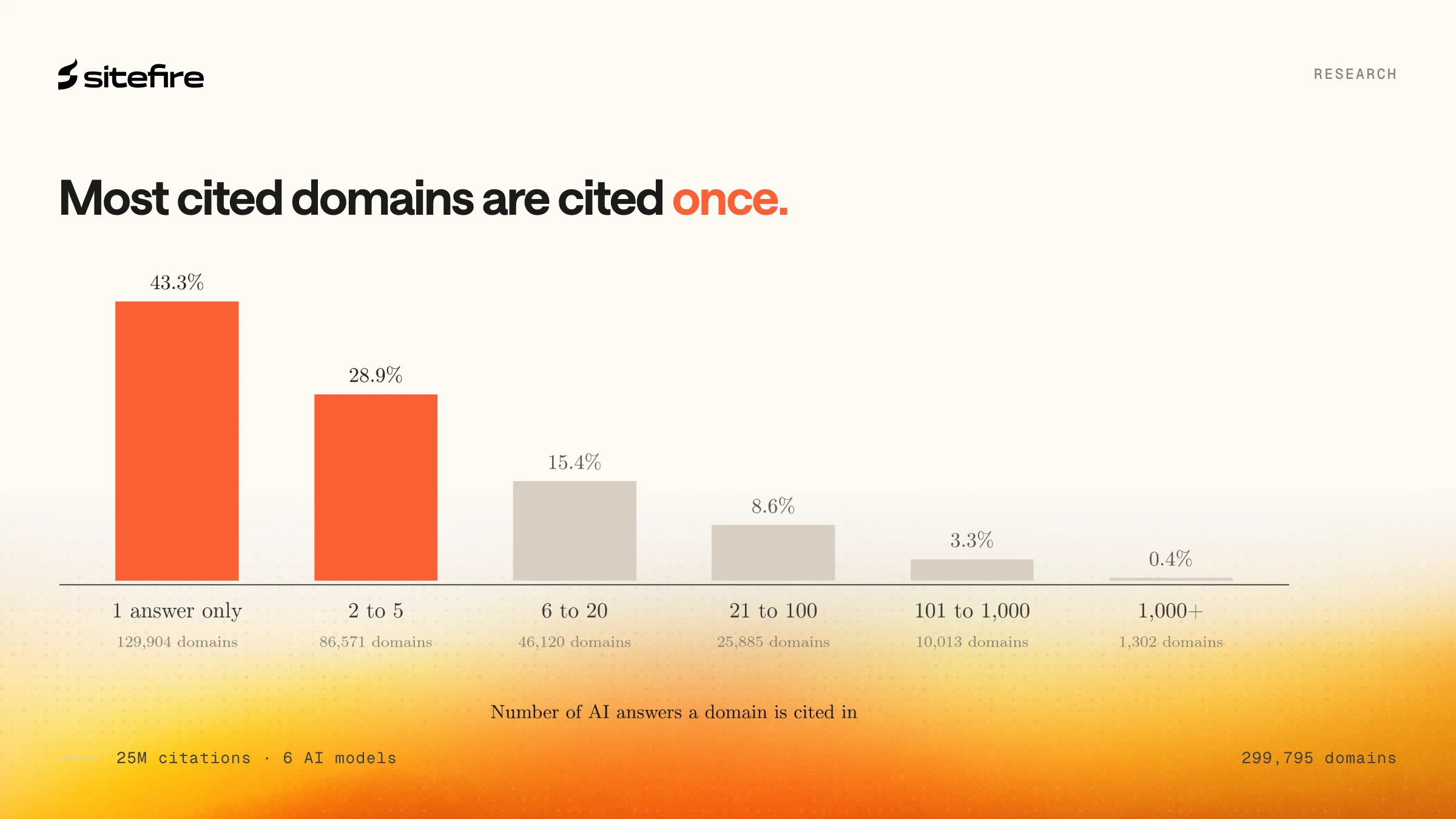
AI Content Is Good Enough - But Good Enough for What?
AI content can rank in Google. But can it earn citations in AI search? Analysis of 25M+ citations reveals what actually gets cited - and it's not production quality.
Jochen MadlerMar 19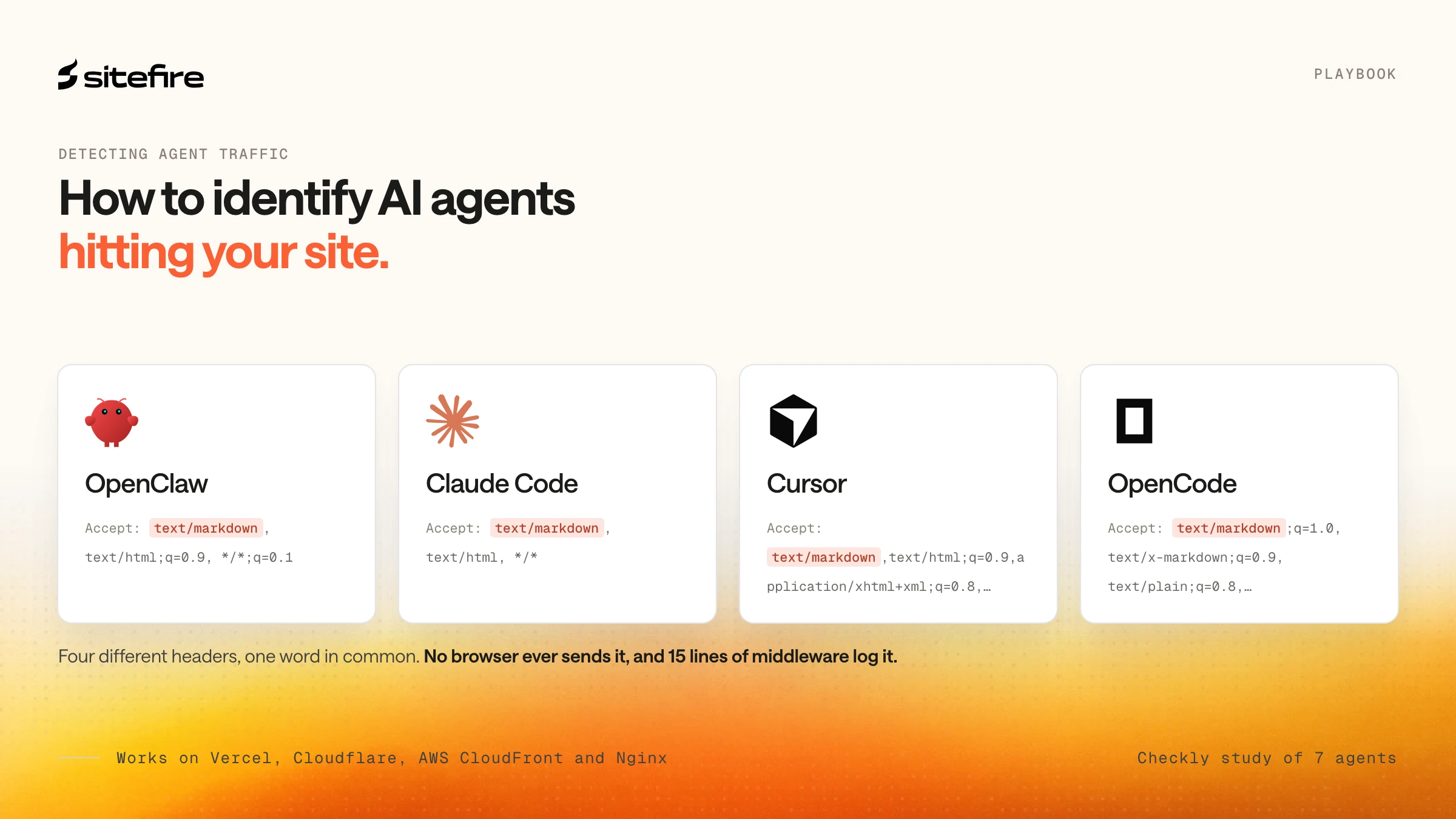
How to Detect AI Agents Like OpenClaw Visiting Your Website
AI agents like OpenClaw send Accept: text/markdown - a header no browser uses. Learn how to detect agent traffic on Vercel, Cloudflare, Nginx, and more.
Jochen MadlerMar 8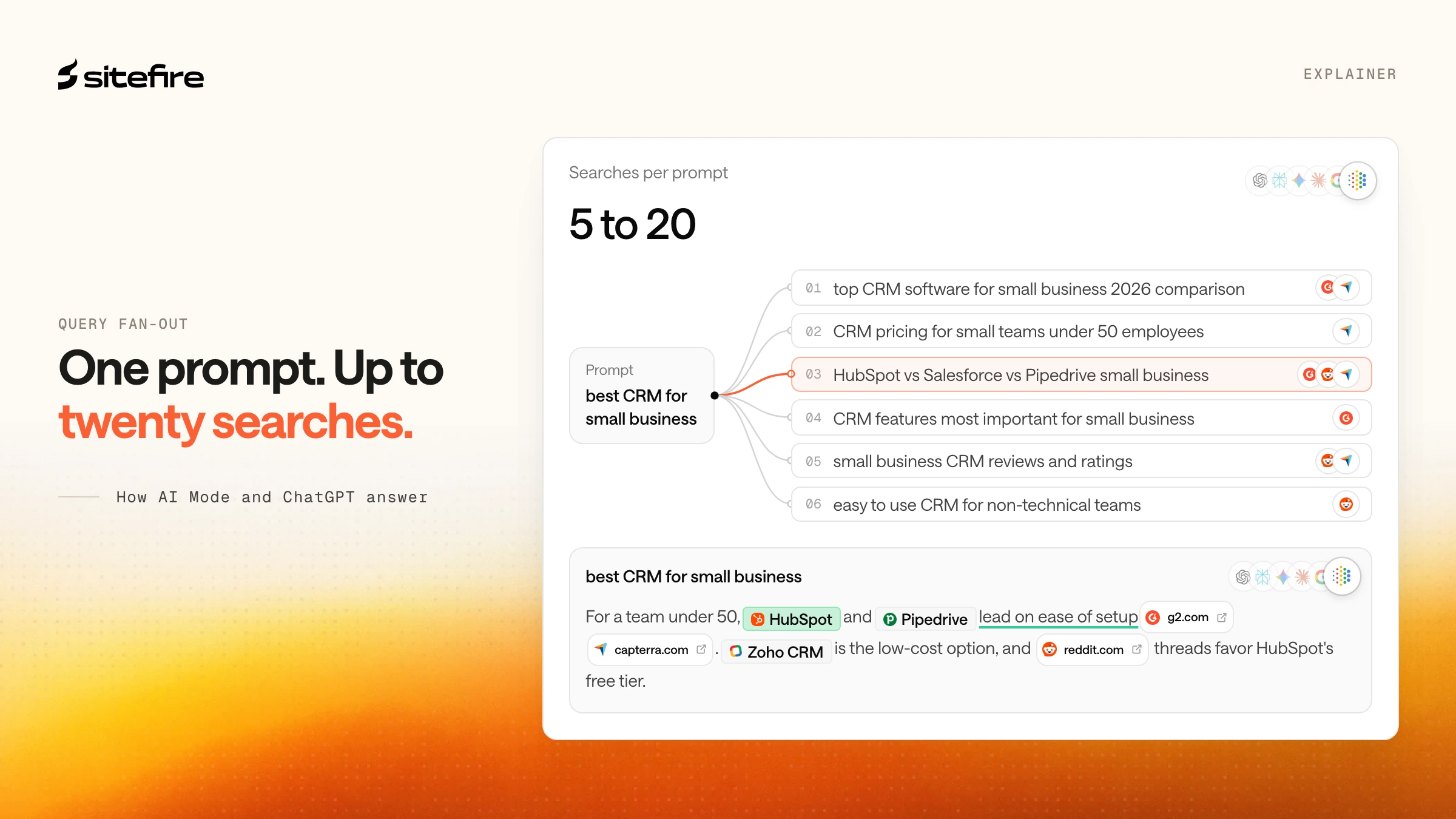
Query Fan-Out: What AI Search Actually Does With Your Query
AI search rewrites every query into 5-20 separate searches before answering. Learn how query fan-out works and why 68% of AI-cited pages aren't in the top 10.
Jochen MadlerMar 3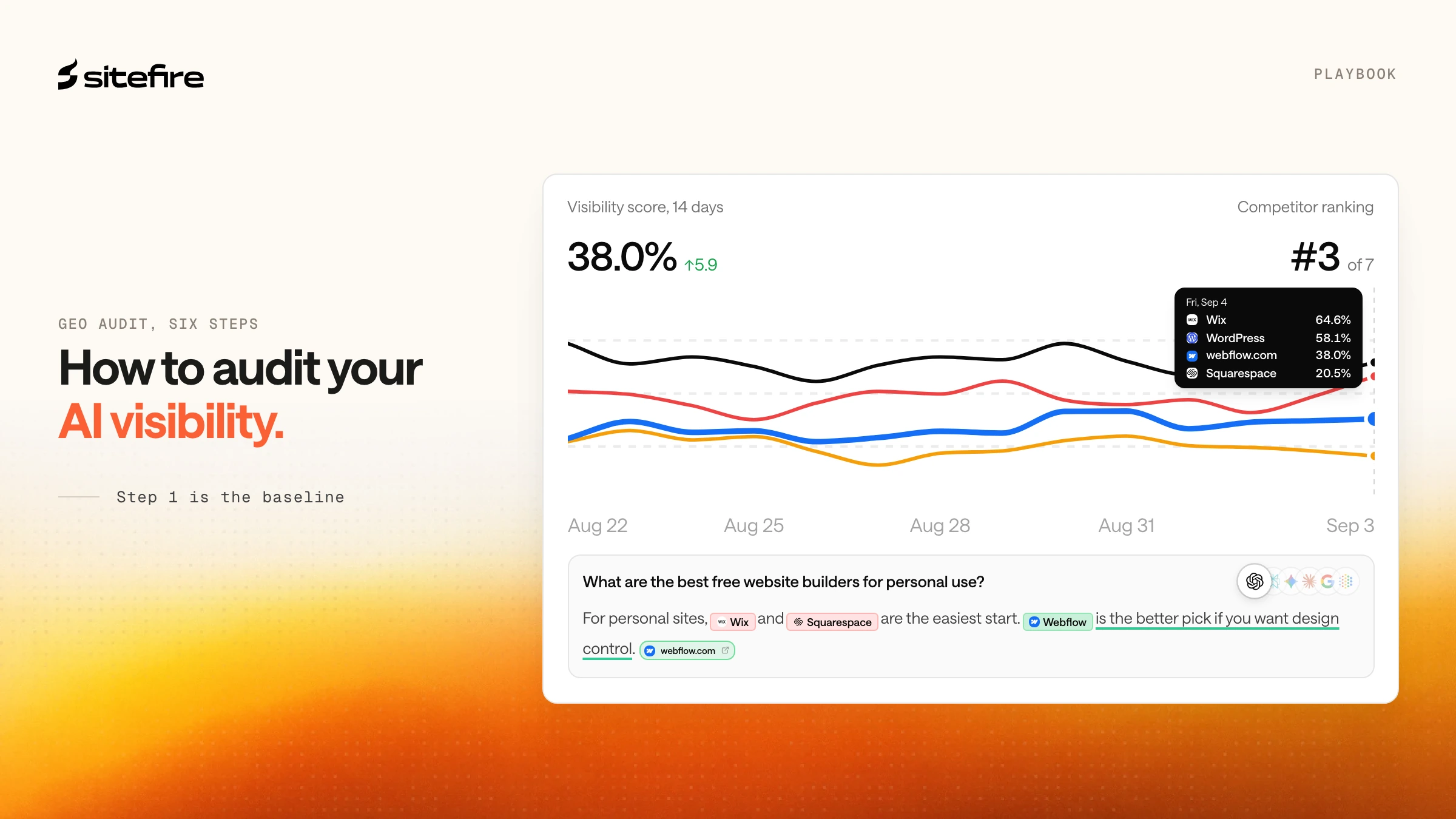
How to Run a GEO Audit on Your Website
A 6-step framework to audit your AI search visibility across ChatGPT, Gemini, and more. Covers content structure, schema markup, and competitor benchmarking.
Jochen MadlerFeb 28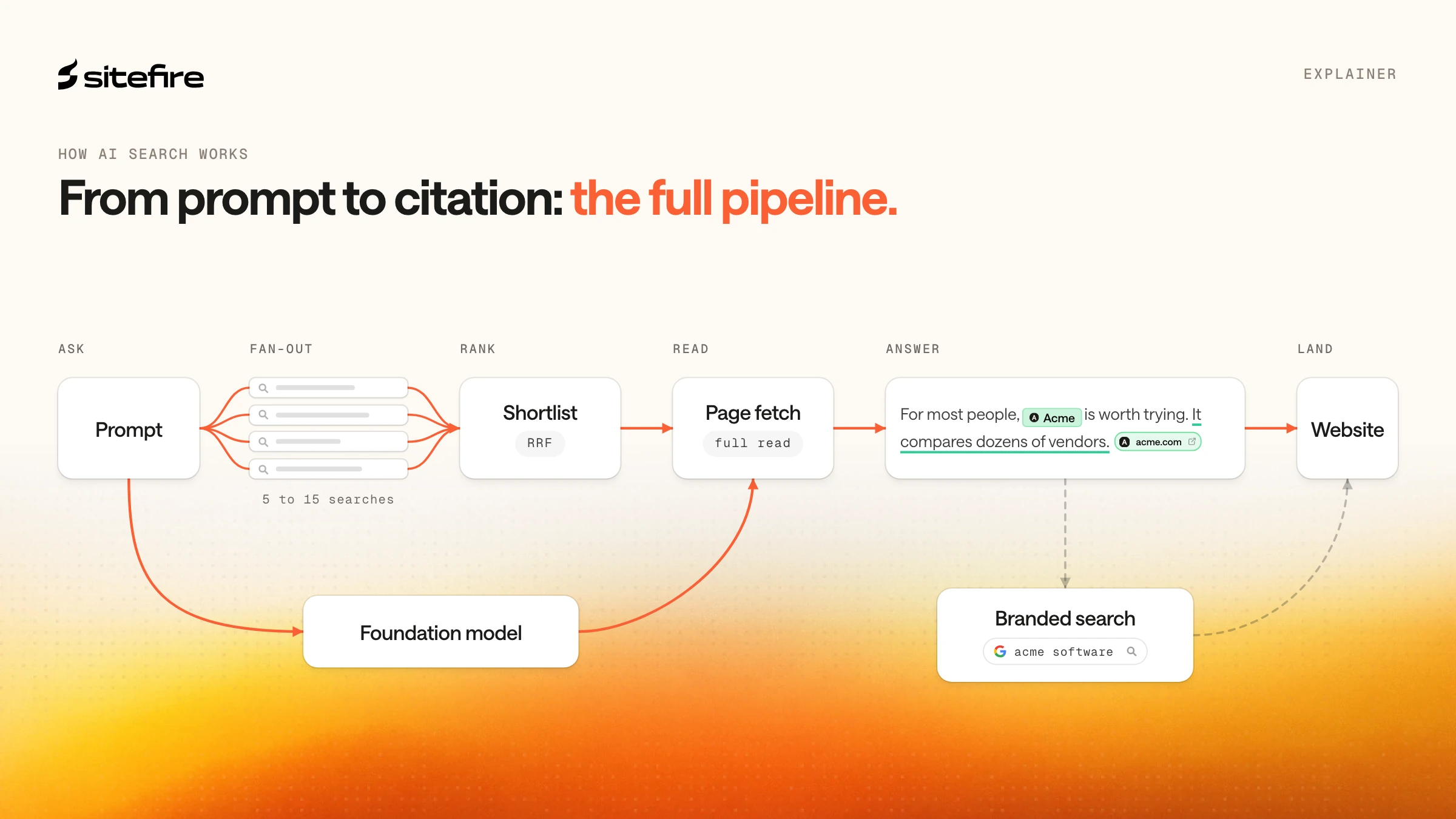
How AI Search Engines Actually Work: From Prompt to Citation
The full pipeline behind AI search: query fan-out, Reciprocal Rank Fusion, and why only 12% of ChatGPT citations overlap with Google results.
Jochen MadlerFeb 26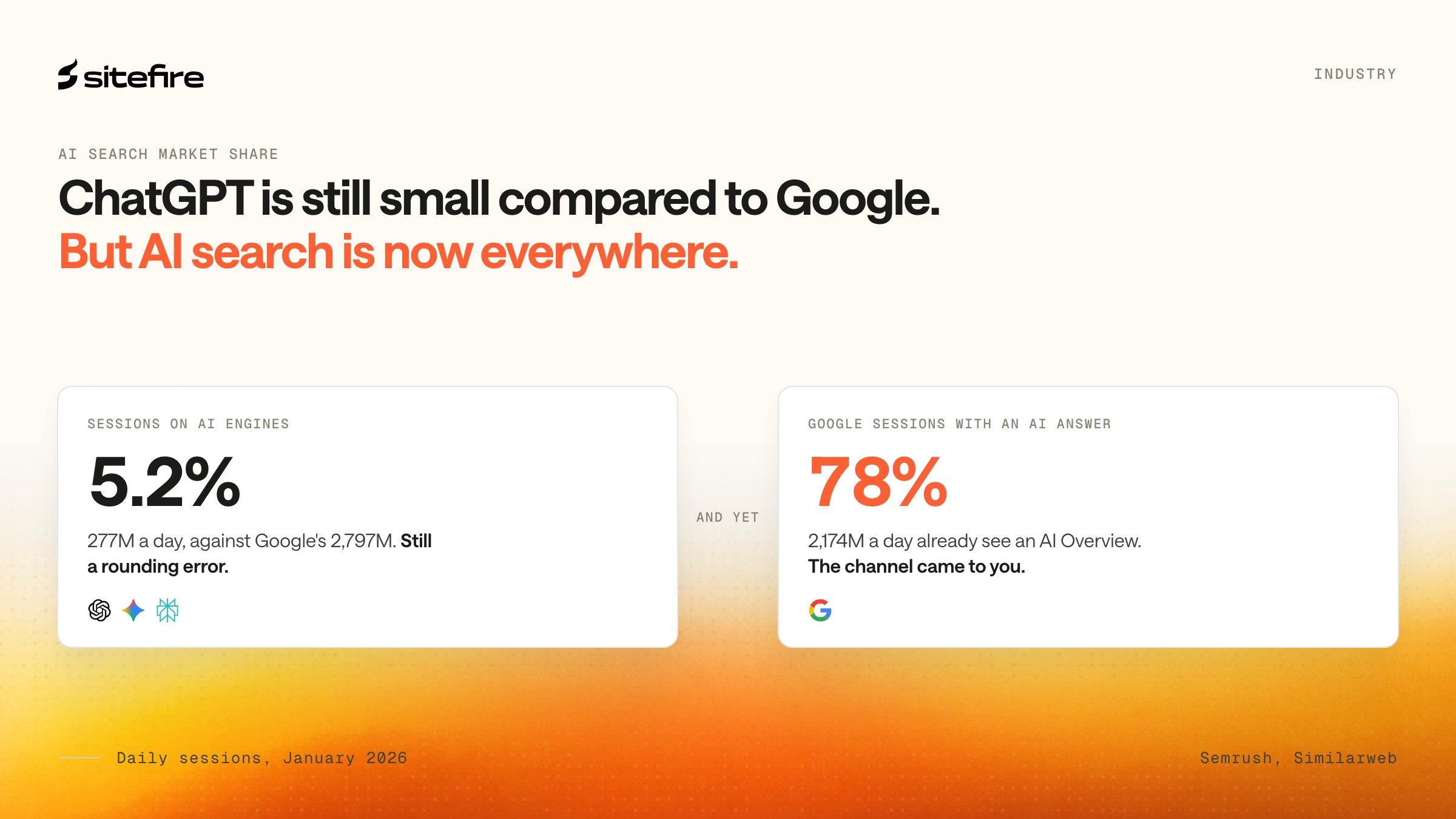
Global AI search engine market share
Google Search is now showing AI-infused content in 78% of sessions. ChatGPT has a 56% share of the AI search market.
Jochen MadlerJan 22